The thing about hiking through unbeaten paths is that you never know what to expect. It’s as exhilarating as it’s exhausting, especially when it starts to rain. The Manabu peak of Mt. Malepunyo (supposedly the easiest peak within the Malarayat Mountain Range traverse dayhike) gave our group quite an experience, to say the least.
I thought I was doing a recovery hike after taking on Malarayat’s 5 peaks three weeks earlier. The hike going up to the peak of Manabu was just as I expected: minor ascents and cool lush rainforest. The trail was wet and muddy because of the harsh rain the day before, but it was manageable.
Starting from the jump off at Santo Tomas, Batangas, we were at the summit after around three hours or less (I’m the slowest as usual, so three hours haha). We were hoping to catch the sunrise at the summit, but rainclouds spoiled the view a little bit. We did get glimpses of Malepunyo, Biak na Bundok and Susong Dalaga for a few seconds, though, as clouds would come and go.
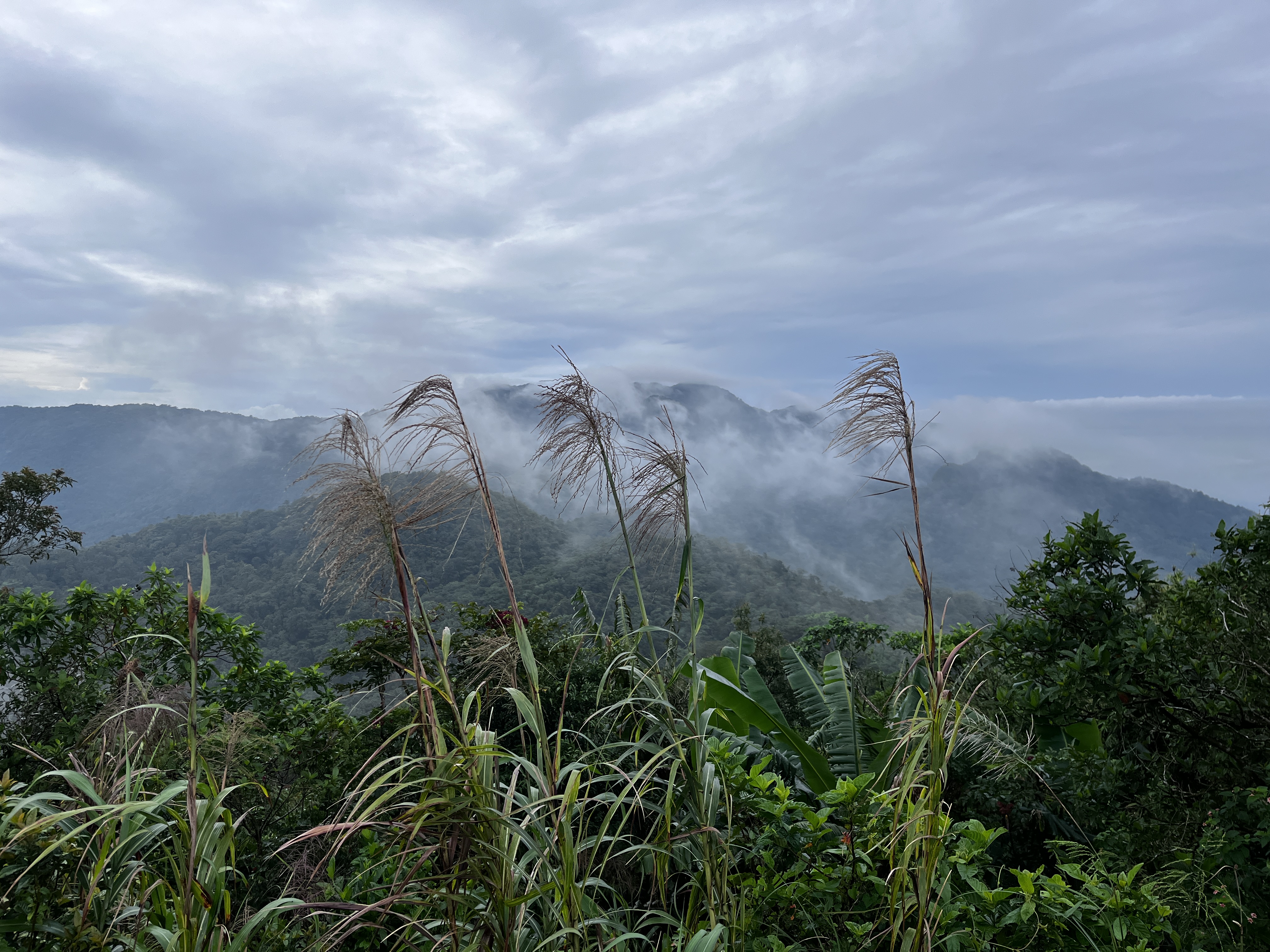
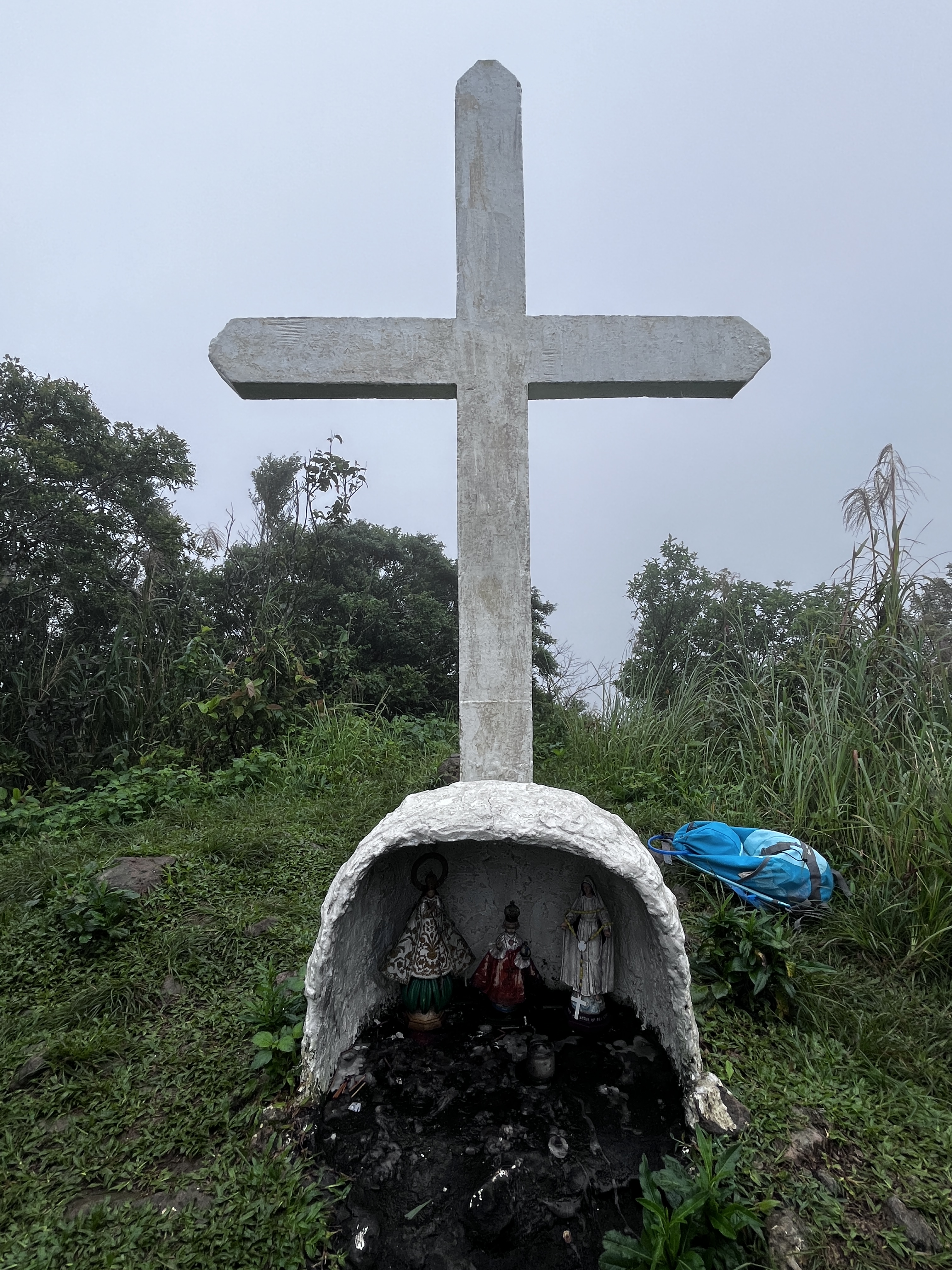
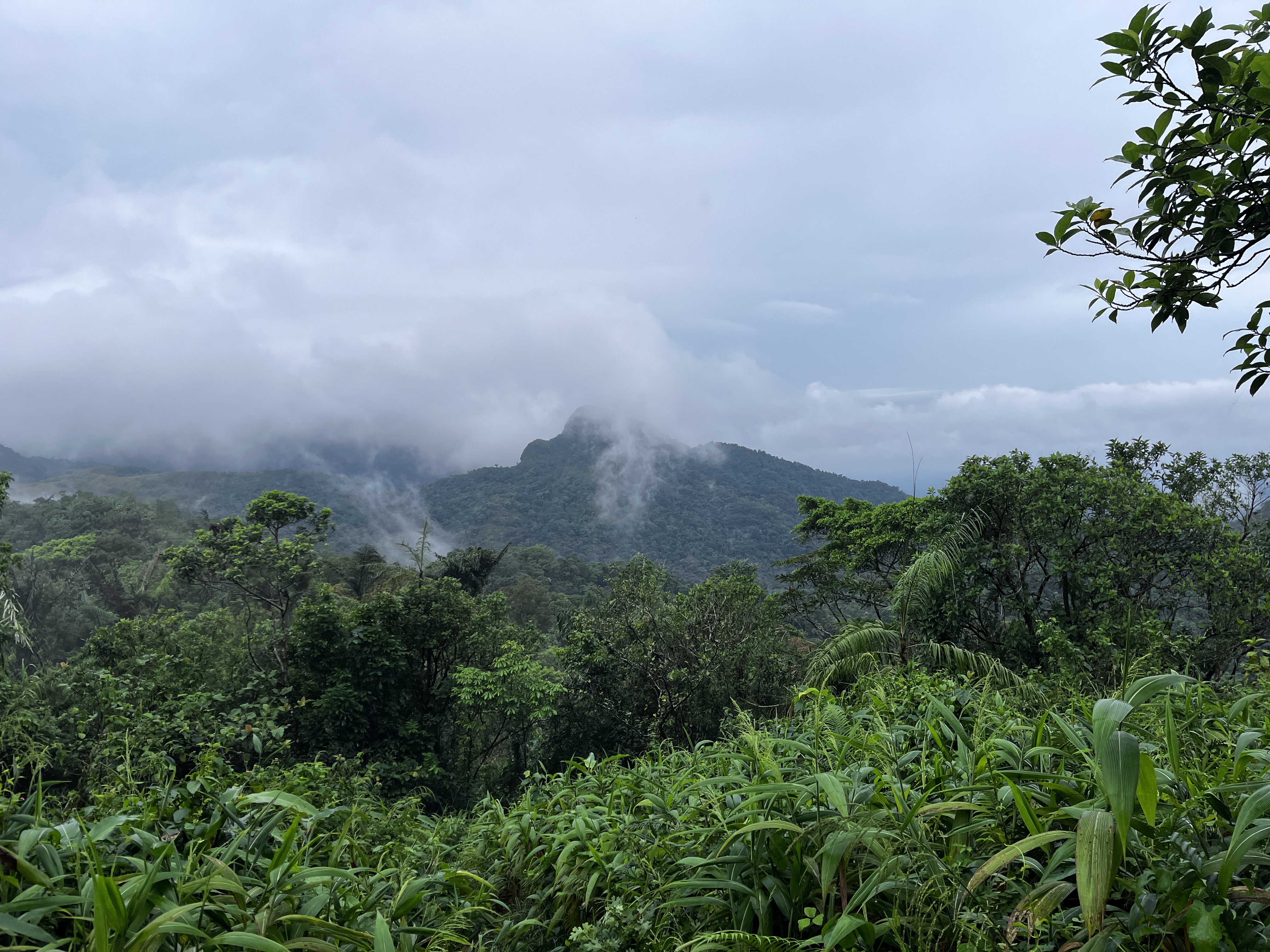
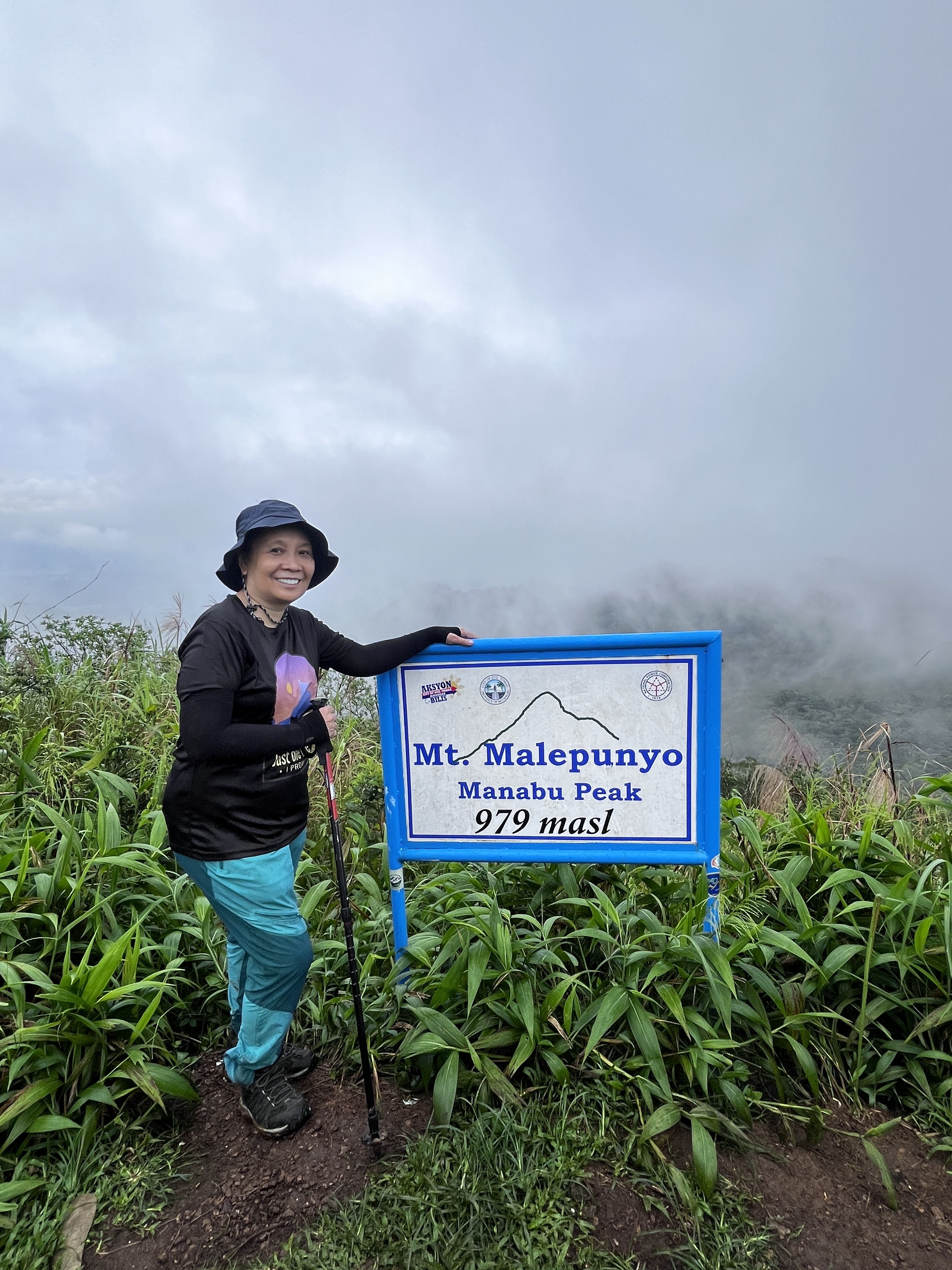
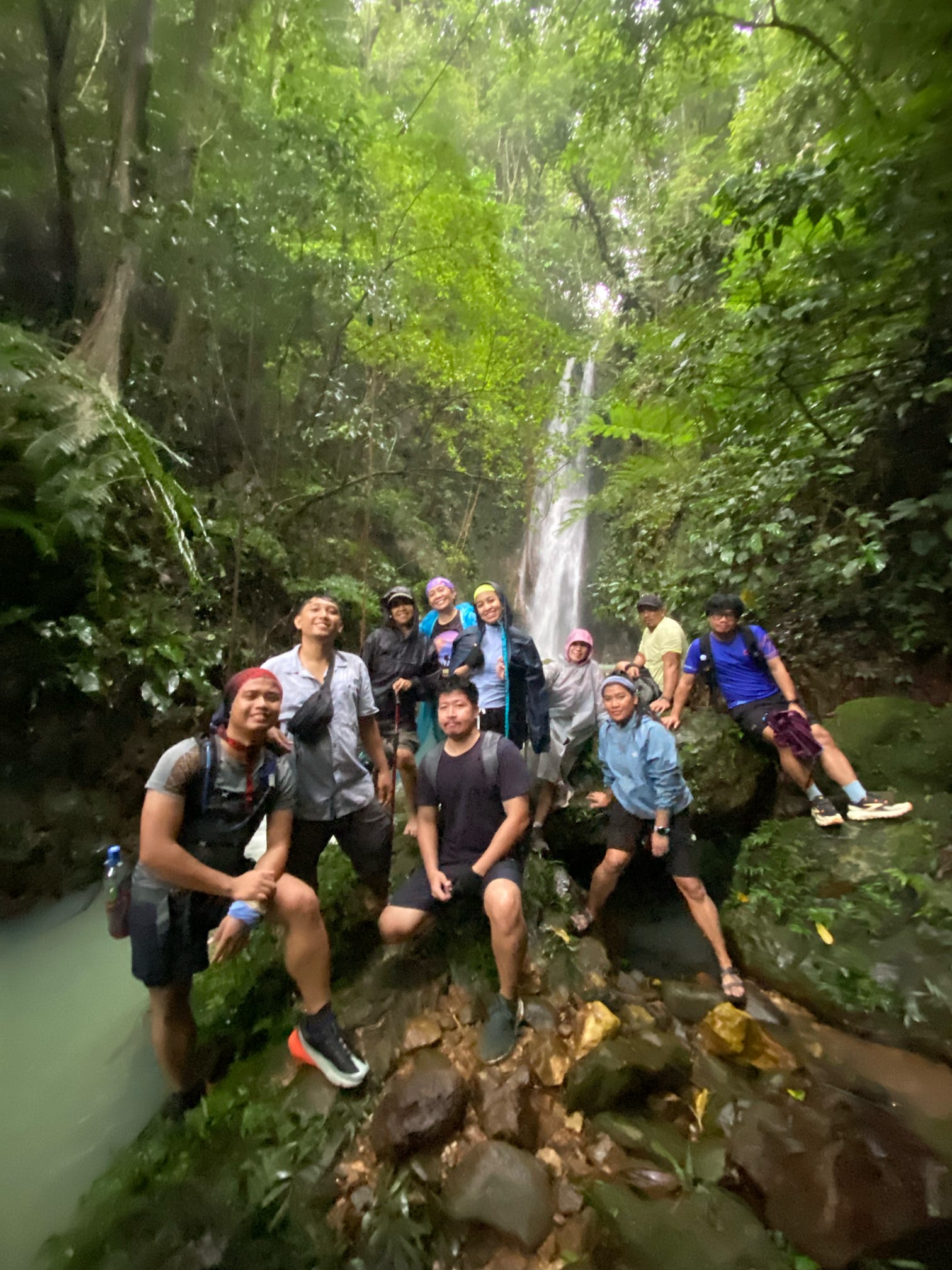
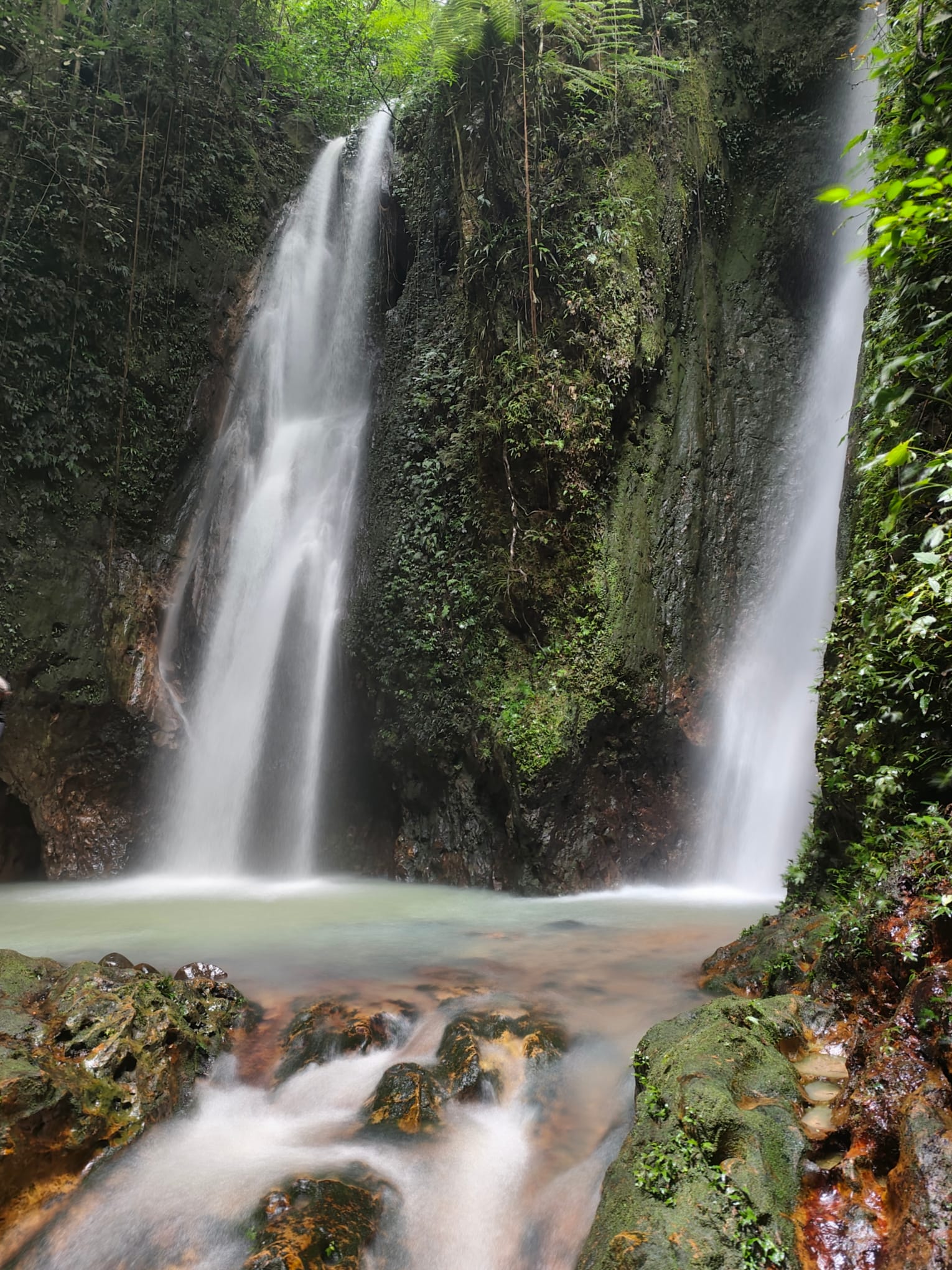
After less than an hour at the Manabu peak, we set out for the twin falls which, according to our tour organizer Kim, is called Talon Simbahan. But I like our tour guide Rhuel’s version better. He says it’s called Makalawang Falls (which is different from Kalawang Falls of Siniloan, Laguna) because its waters used to have the color of rust. According to Rhuel, legend has it that there used to be plenty of gold there. Gold, or copper? Kasi it’s kalawang di ba kulay copper yun? I asked him. Silence. So I asked him another question: so anong nangyari? Nasan na yung gold? Another silence, so I answered my own question. Na-mine siguro. Parang online selling lang e.
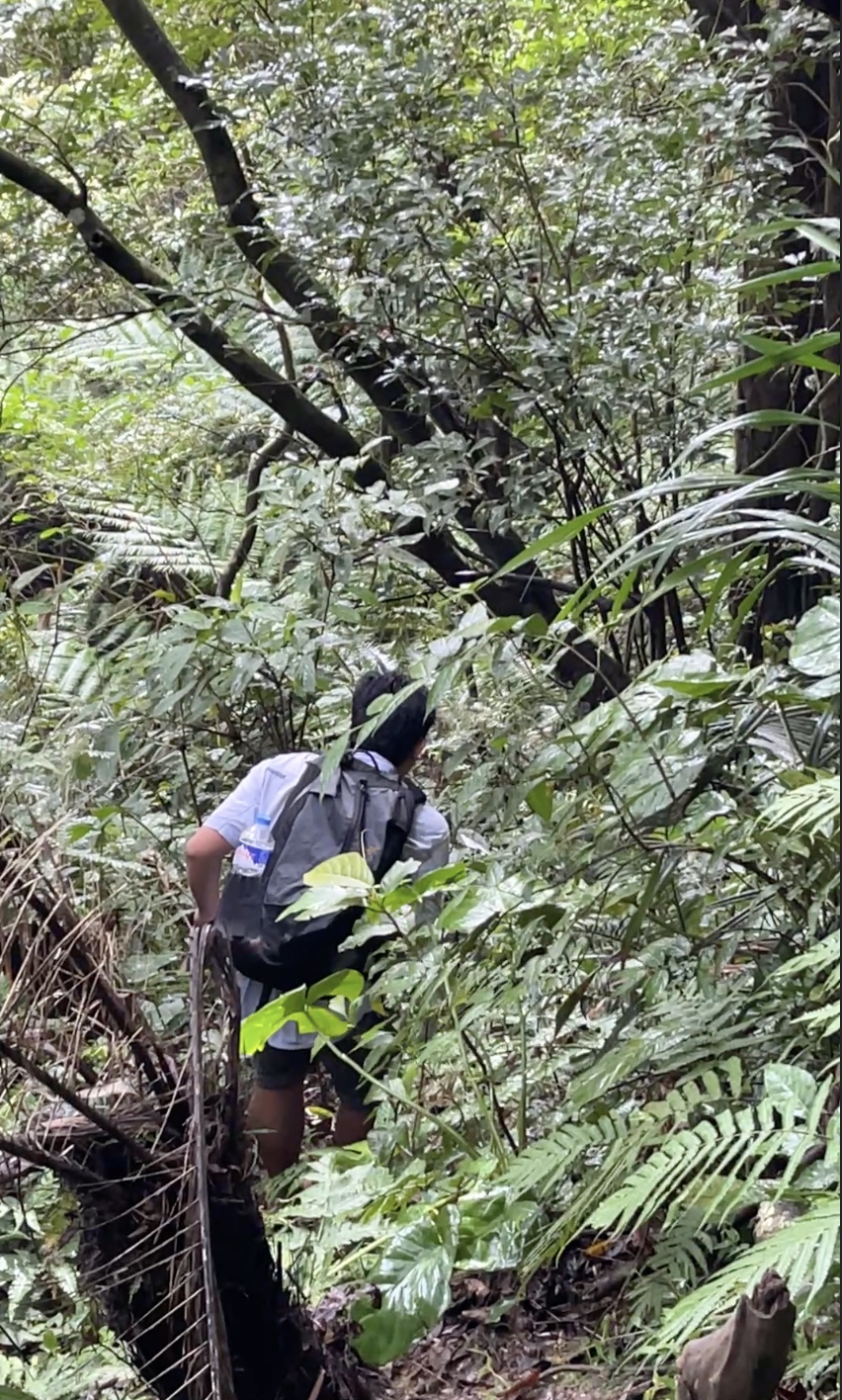
The trail going to the twin falls was the toughest part of this entire hike, whether it be ascending or descending. Just like our hike to Malepunyo, the forest in this part was thick with barely established paths. Dangerous creatures call this rainforest home, so this is definitely not for the casual social media hiker. But because this is a sacred mountain (just like most mountains in Batangas and Laguna), we felt protected throughout.
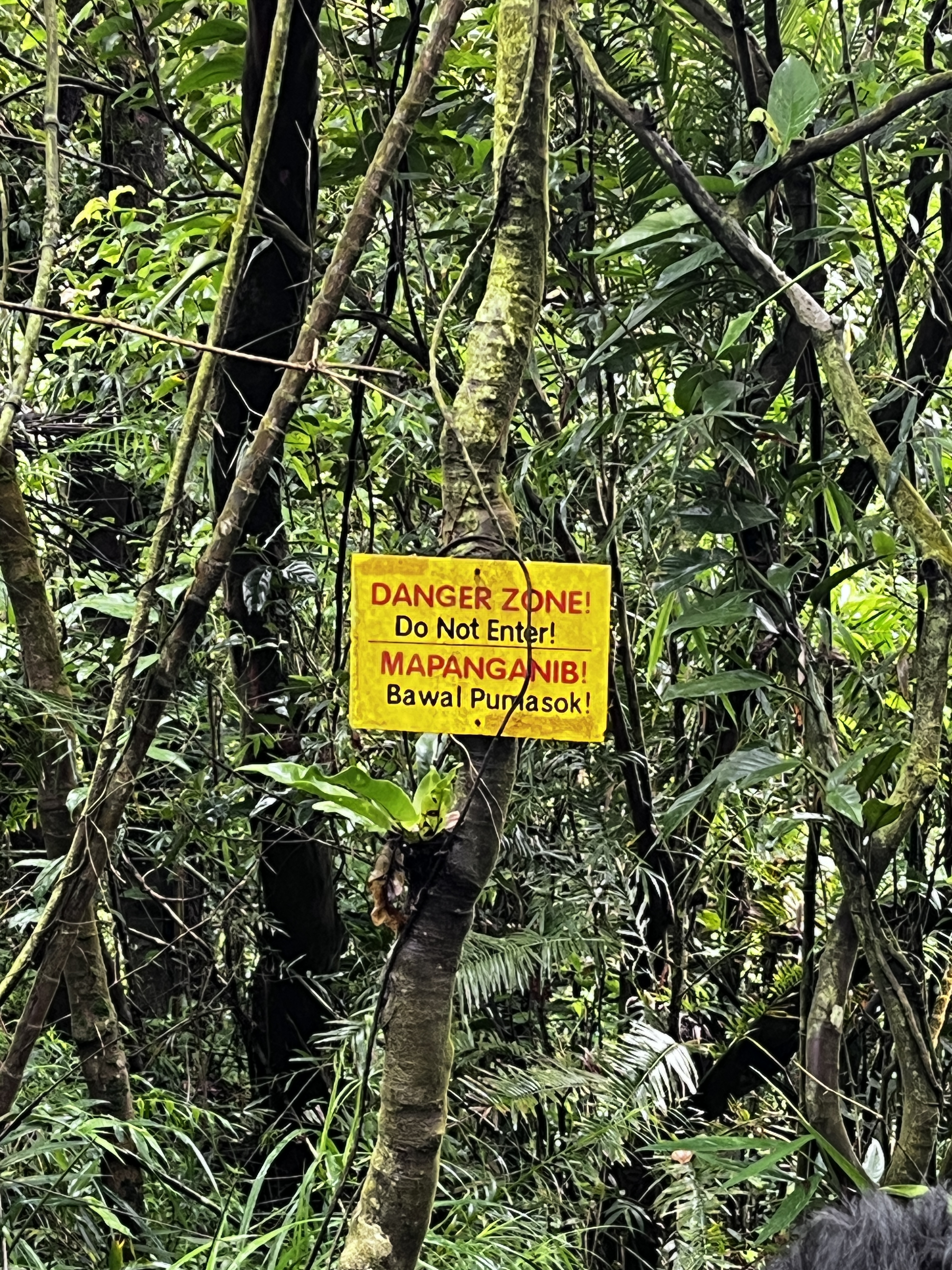
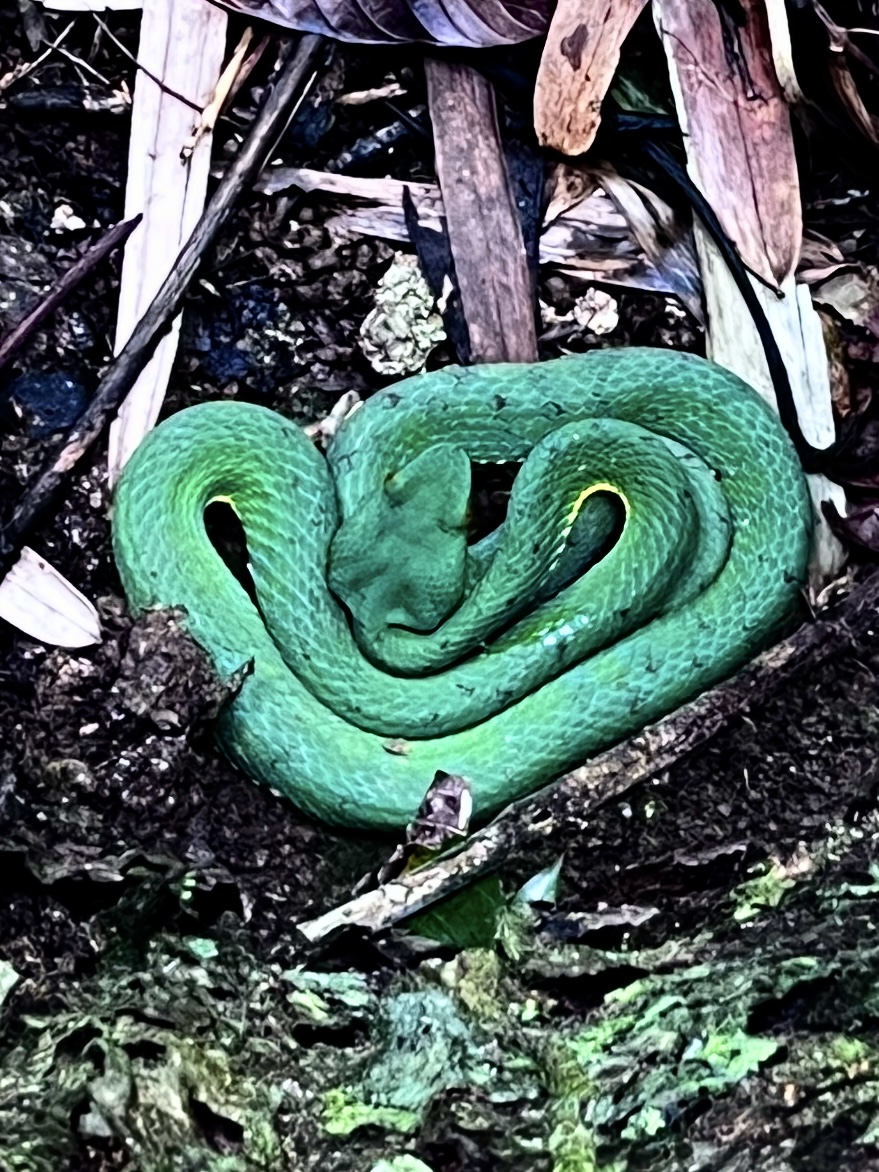
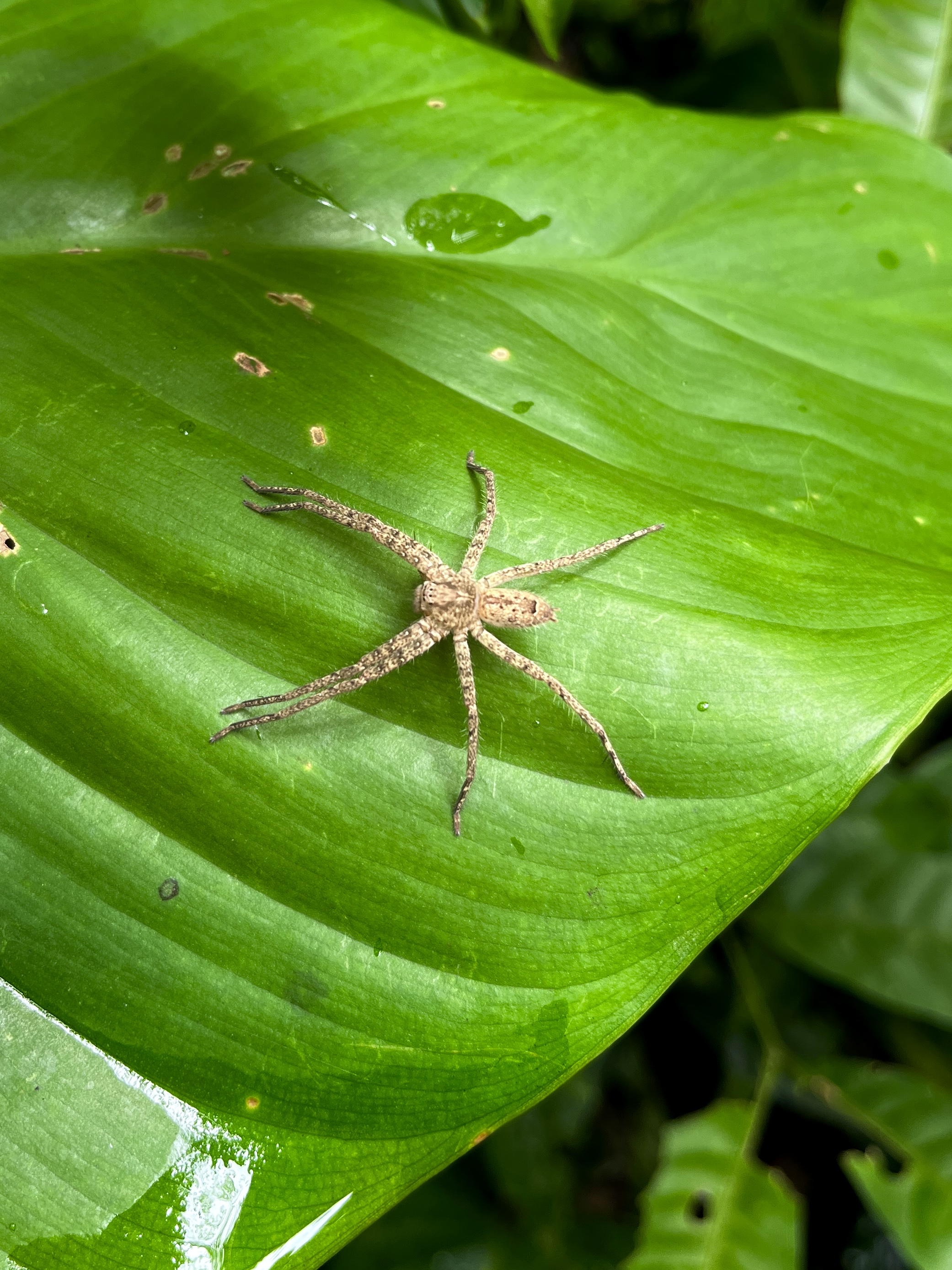
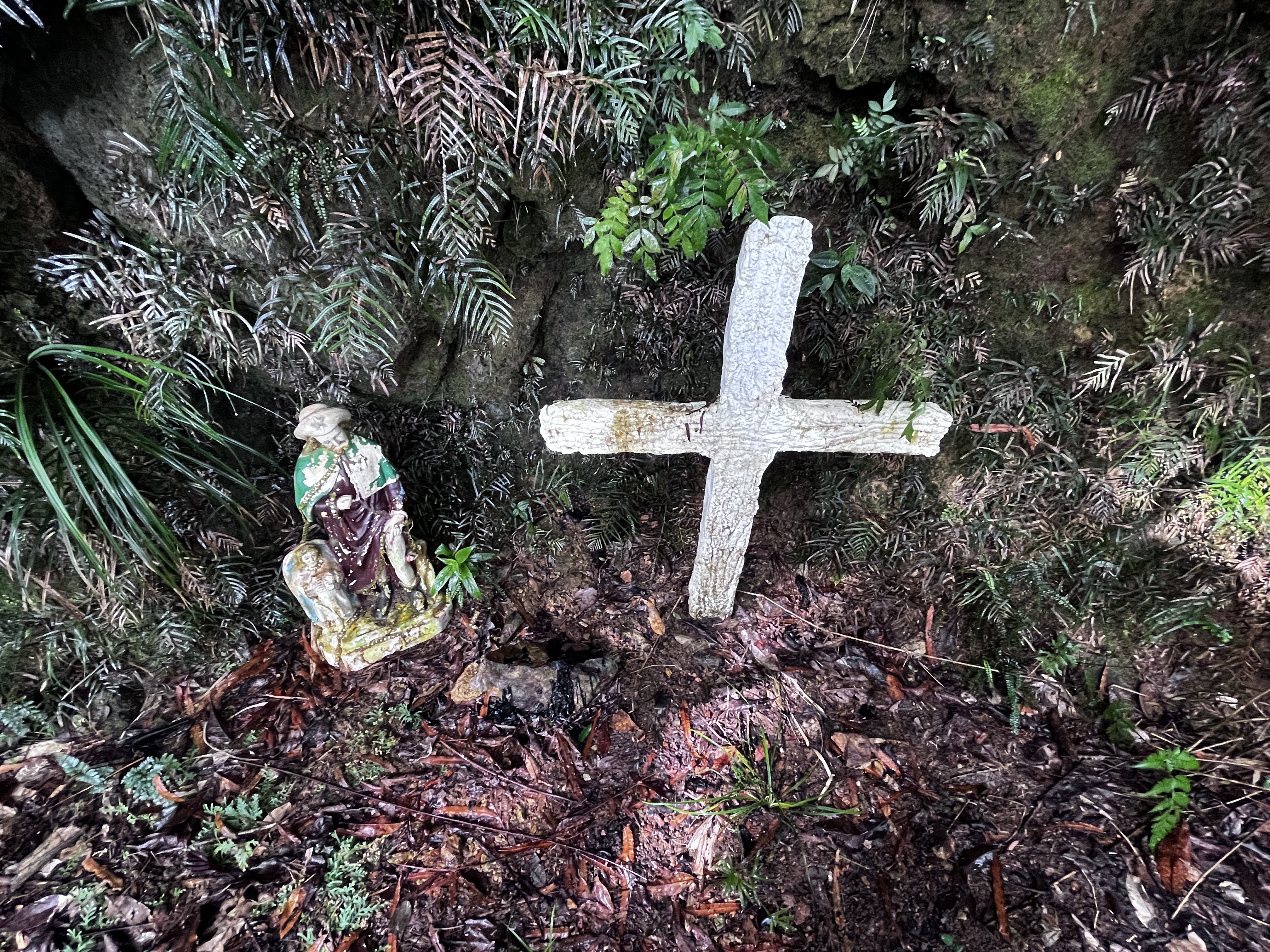
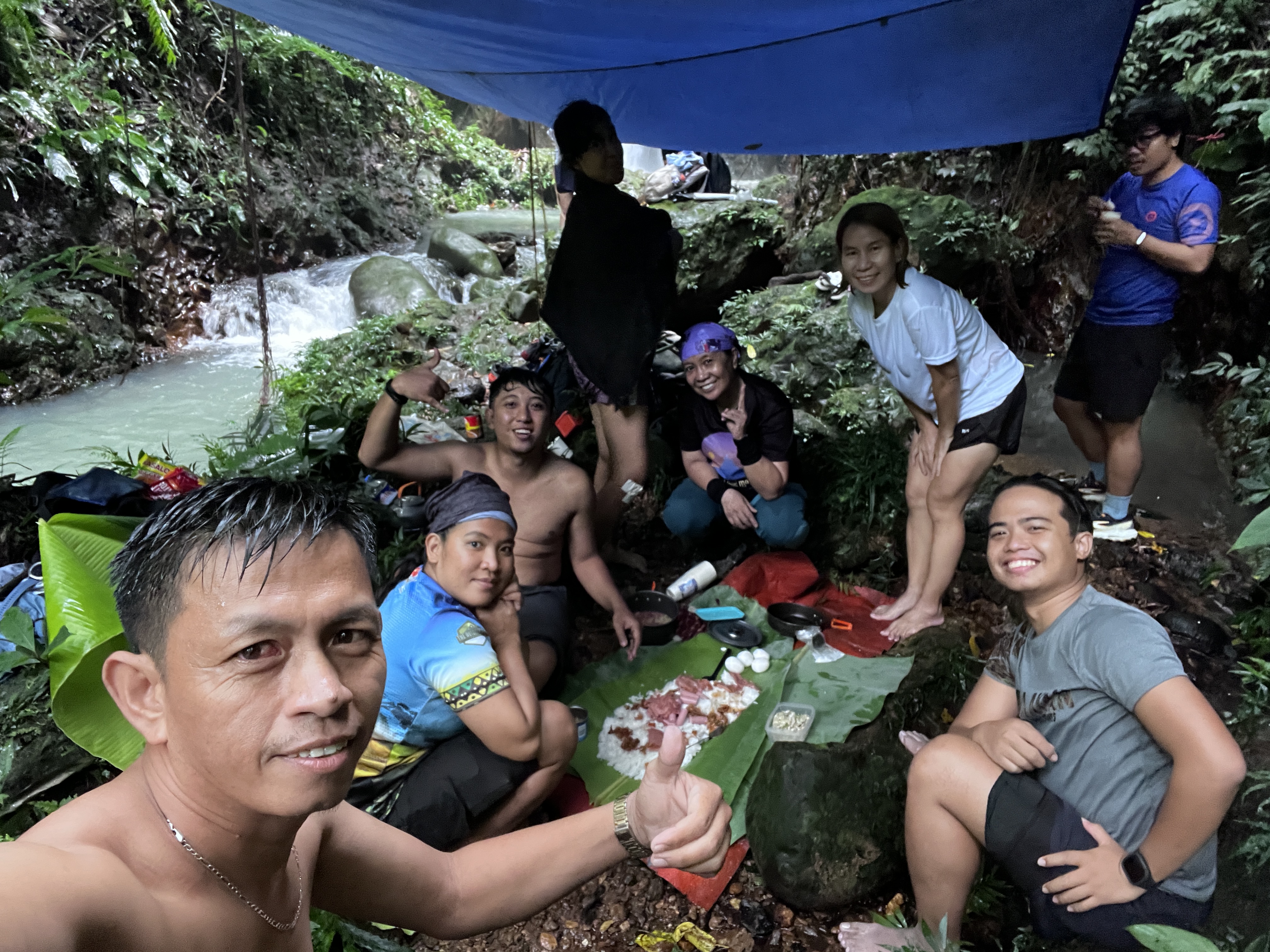
By 11AM, we arrived at the falls. The current was strong and the water cold. Only a few of us were brave enough to swim in the cold water, while the rest of us were just happy to soak our tired feet and legs. They set up a tarp and banana leaves in a spot where we had a mini boodle fight for lunch. We stayed until 2PM before heading to a second peak named Pataguim.
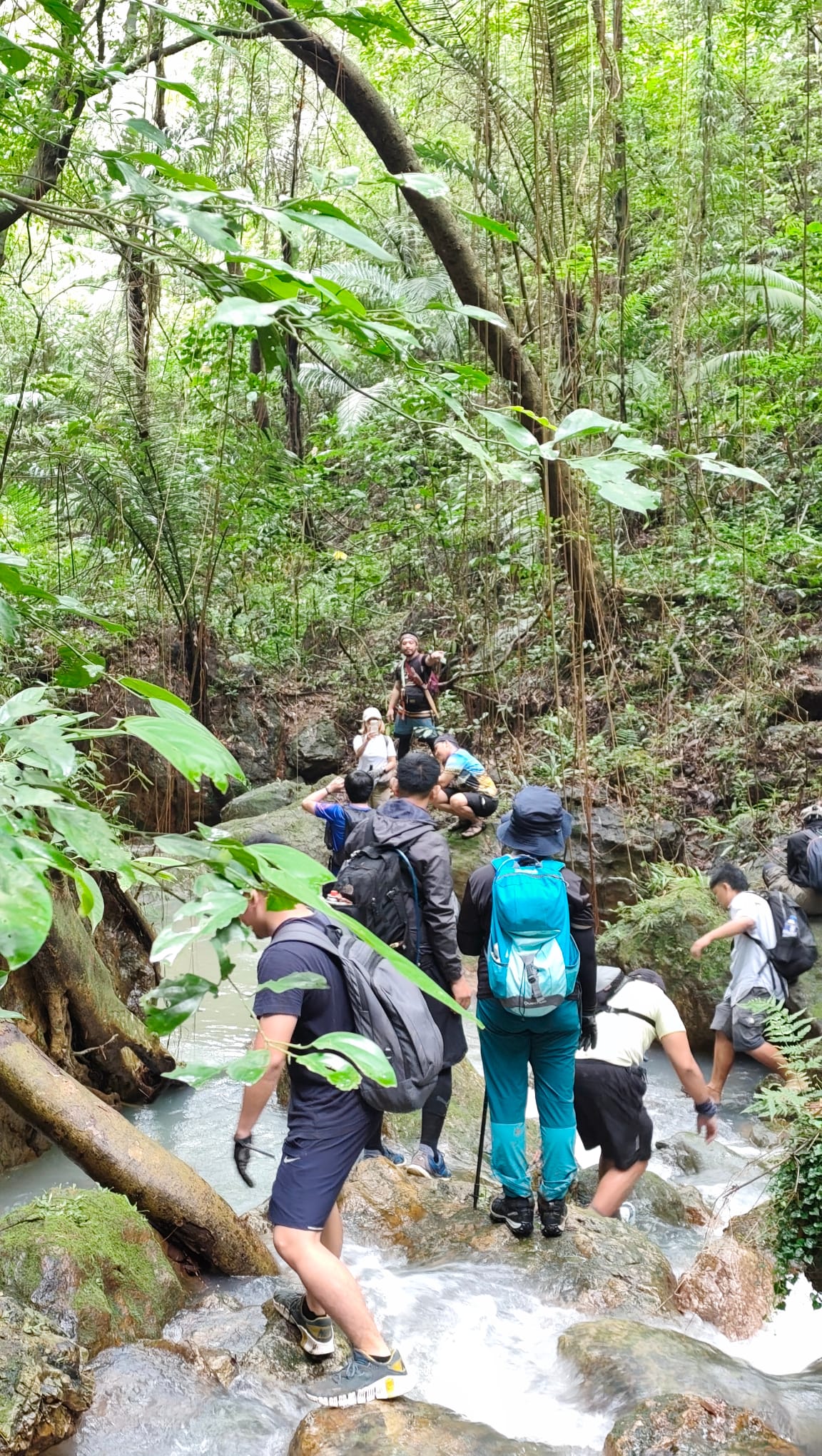
The river crossings were extra tough for me and another hiker, Neil. Our shoes somehow lost their grip, making the boulders too slippery to step on. My trekking pole was not enough to keep me steady, so there were times I had to crawl on all fours to get from one boulder to another. I didn’t expect that we would be soaking shin deep at certain parts, so my feet were squishing the rest of the way. Needless to say, I had serious cramps somewhere near Pataguim.
When we finally got out of the river crossings, medium rain started to fall. I had no idea how far along we were from the next peak, so I kept praying that we all make it through safe and sound and not get stranded within the thick rainforest. We decided not to go up to Pataguim anymore for safety’s sake and went straight for the descent which would take us down somewhere in Alaminos, Laguna.
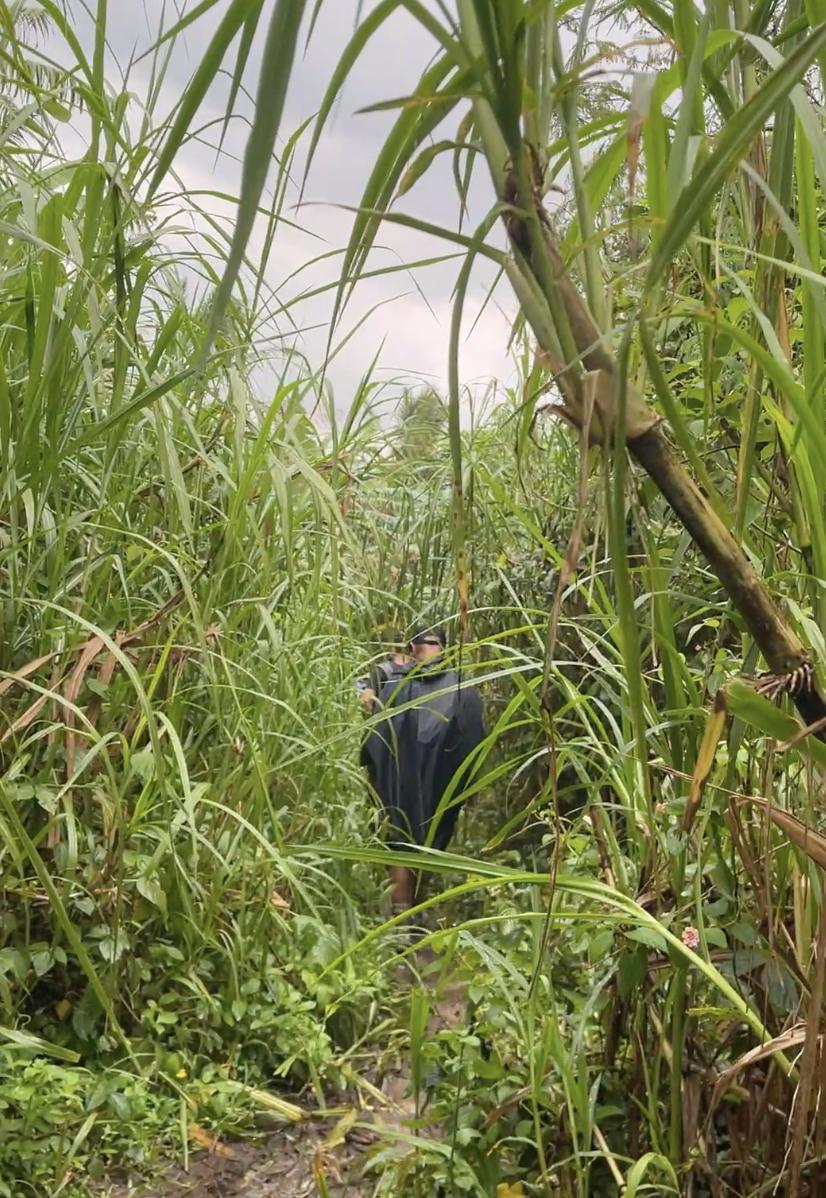
Before we reached the ground, we went through tall cogon grasslands that swallowed us out of visual reach. The descending steps going down to the concrete road was interesting. It was gold-colored stone that, according to Rhuel, was intentionally formed by local residents nearby. It’s not gold, of course, but it reminded me of Rhuel’s story about the legendary gold at the twin falls.
“Congratulations! You finally completed 75% of Malarayat!” Kim told me. “There’s 25% more? Where?” I asked, half-triumphant and half-exasperated. Apparently, the rest still don’t have trails and not open to hikers. Good, I told myself, let’s leave our mountains alone. Ironic for someone who loves hiking, no?


 beingKirei